

Key takeaways
- An Access to HE Diploma is a one-year, 60-credit Level 3 qualification for adults: 45 credits are graded Pass, Merit or Distinction and 15 are ungraded, and UK universities widely accept it instead of A-levels.
- In England, learners aged 19 or over with refugee status or humanitarian protection can pay for an Access to HE course with an Advanced Learner Loan, and the balance is cancelled if they go on to complete a higher education course at Levels 4 to 6.
- From the 2025/26 academic year, integrated foundation years in classroom-based subjects are capped at £5,760, and that cap stays at £5,760 in 2026/27, while other foundation years can charge up to £9,790 at providers with a TEF award and an access and participation plan.
- The Lifelong Learning Entitlement funds Level 4 to 6 courses, including degrees with foundation years, that start from January 2027, but Access to HE Diplomas are Level 3 and stay on Advanced Learner Loans.
- About 36,183 students registered on an Access to HE Diploma in the UK in 2023-24, down from 43,420 in 2020-21, according to QAA figures.
Missing A-levels does not close the door to a UK university. If you are 19 or over, a widely used alternative is an Access to HE Diploma: a one-year Level 3 course, usually at a further education college, that universities widely accept in place of A-levels. If you already know where and what you want to study, an integrated foundation year adds a preparatory year to the front of a degree. A third option, the preparatory certificate or international foundation programme, is designed for people whose school qualifications from abroad are not enough for direct entry.
Each route suits a different person. Age matters, because loans for Access courses start at 19. Immigration status matters, because it decides whether you pay home or overseas fees and whether you can borrow. And what you studied before matters, because a strong school record from home opens different doors from an interrupted one.
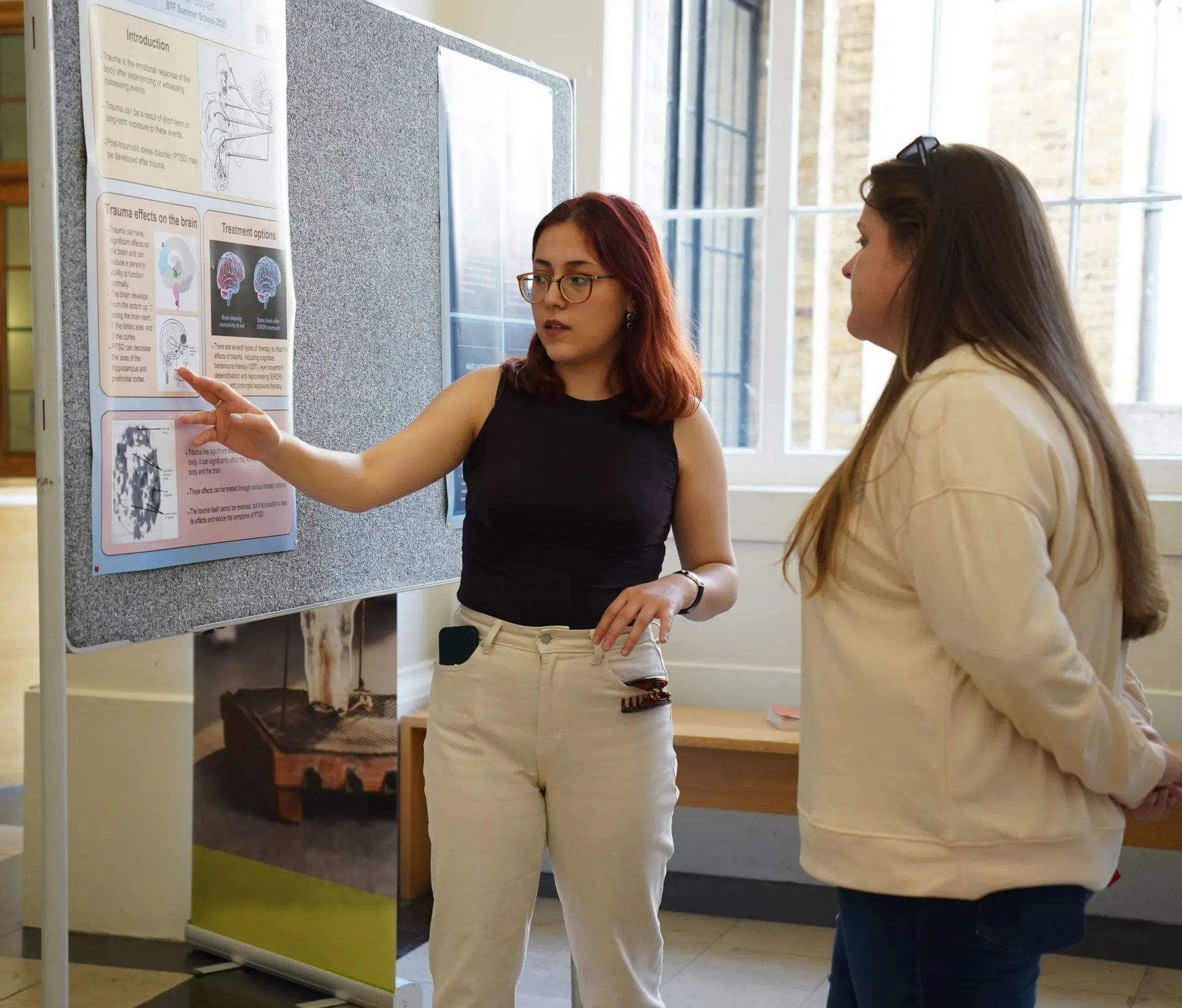
We run a free STEM summer school at UCL and an online mentoring programme for young people from refugee, asylum-seeking and forced-migrant backgrounds, and our mentors help with university applications. This guide sets out how each route works, what it costs in 2026/27, what the Lifelong Learning Entitlement changes from January 2027, and how to choose.
- credits make up every Access to HE Diploma
- 60credits make up every Access to HE Diploma45 graded at Level 3, 15 ungraded at Level 2 or 3
- students registered on an Access to HE Diploma in the UK in 2023-24
- 36,183students registered on an Access to HE Diploma in the UK in 2023-24Down from 43,420 in 2020-21
- maximum fee for a classroom-based foundation year
- £5,760maximum fee for a classroom-based foundation yearFrom 2025/26, unchanged in 2026/27
This is general information, not legal, immigration or financial advice. Funding rules are detailed and change often, so for your own case check with the college or university, Student Finance England, or a specialist such as UKCISA or Refugee Education UK.
Which routes into university exist if you missed A-levels?
There are four realistic routes for most young people from displaced backgrounds, plus two vocational options that mostly apply to 16 to 18 year olds already in a UK college. The table compares the main four side by side.
| Access to HE Diploma | Integrated foundation year | Preparatory certificate / international foundation (e.g. UCL UPC) | A-levels at a college | |
|---|---|---|---|---|
| Length | Usually one year full-time; part-time over two years or more | One extra year at the start of a degree | Usually one year | Two years |
| Where | Mostly further education colleges (69.5% of registrations in 2022-23) | The university, or a partner college | The university | School sixth form or college |
| Typical age | Designed for adults; loans need you to be 19 on the first day | Any age once you can enrol on a degree | UCL’s UPC: at least 16 when the course starts | Usually 16 to 18 |
| What you get | A standalone Level 3 qualification | No standalone qualification; you progress within the degree | A certificate used to apply to degrees | A-level grades |
| Cost in 2026/27 | Set by each college | Capped at £5,760 (classroom-based) or £9,790 (other subjects) | UCL: £28,000 | Varies by age and provider |
| How it is paid for | Advanced Learner Loan, or full funding if eligible | Student finance, if you have home fee status | No government loans; scholarships such as UCL’s Bowman | Varies; loans possible at 19+ |
| Progression | Apply through UCAS to any university that accepts it | Straight into year one at the same university if you pass | Apply to the host university or elsewhere | Apply through UCAS |
Figures come from the QAA, the Office for Students and UCL, all linked below. The rest of this guide takes each route in turn.
What is an Access to HE Diploma?
The Access to Higher Education Diploma is a Level 3 qualification, regulated by the Quality Assurance Agency for Higher Education (QAA), built specifically to prepare adults for degree-level study. QAA describes courses as designed, in particular, for people who have been out of education for some time or who left school with too few qualifications to go straight to university.
Each diploma has a subject title, such as Access to Higher Education Diploma (Science), (Nursing), (Social Sciences) or (Engineering). The title matters, because universities look for a diploma that matches the degree you want.
How the 60 credits fit together
The rules are set out in QAA’s Access to Higher Education Diploma Specification, revised in July 2025. In summary:
- Every diploma is worth 60 credits.
- 45 credits must come from graded Level 3 units with academic subject content: biology, chemistry, maths for engineers, sociology and so on.
- The remaining 15 credits come from ungraded units at Level 2 or Level 3, often study skills, academic writing or subject maths.
- Units are worth 3, 6 or 9 credits, and one credit represents about 10 notional learning hours, covering classes, private study, assignments and assessment.
- Every student must take at least one 6- or 9-credit unit, often a research project, and no more than 30 credits can come from these larger units.
A QAA and Agored Cymru case study puts it plainly: a diploma typically involves around 600 hours of study over one year full-time or two years part-time, and a student can expect to take about 15 units.
How grading works
Only the 45 graded credits receive a grade. Each graded unit is awarded Pass, Merit or Distinction, and no other form of grading is permitted. You earn the credit when you pass; a Merit or Distinction does not earn extra credit, but it does change your grade profile, which is what universities use in their offers.
Offers are therefore written in terms of credits. A typical offer might ask for all 45 graded credits at Level 3 with a stated number at Distinction and the rest at Merit. Some courses also ask for specific units, such as chemistry for a pharmacy degree, and many still ask for GCSE English and maths or an equivalent. Requirements vary by course, so read the entry requirements on each university’s page before choosing your diploma.
Who takes it, and how many
In 2022-23, 38,220 students registered on an Access to HE Diploma, according to QAA’s Key Statistics 2022-23. Of those, 76% were female and 60% were over 25. Nearly six in ten registrations (59.78%) were in health, public services and care, which reflects how many students use the diploma to enter nursing and midwifery. Science and mathematics diplomas accounted for 4,405 registrations, or 11.52%.
The trend since 2020-21 has been downward.
Students registered on an Access to HE Diploma, UK
Registrations by academic year, as published by QAA
Show the data as a table
| Category | Value |
|---|---|
| 2020-21 | 43,420 students |
| 2021-22 | 40,855 students |
| 2022-23 | 38,220 students |
| 2023-24 | 36,183 students |
For context, QAA reported 37,045 registrations in 2017-18, so registrations were higher in 2020-21 than in 2017-18 and have fallen back since.
What happens afterwards
The published outcomes are encouraging for anyone worried that Access to HE is a lesser route:
- 94% of students who completed their course in 2022-23 were awarded the diploma.
- 19,320 Access to HE applicants were accepted for September 2023 entry, down from 22,630 for 2022 entry.
- Among students entering higher education with an Access to HE Diploma, 25.3% achieved a first-class degree in summer 2022, against 26.1% of students with other qualifications, according to QAA’s Key Statistics 2021-22.
- The non-continuation rate for mature students entering with Access to HE was 11.2%, against 14.9% for mature students with other qualifications.
One figure deserves a warning. Only 66% of all registered students had completed their diploma by August 2023, and QAA found that 31.5% of withdrawals happened within the first 43 days. The first six weeks, when the workload arrives and life outside college is at its most unsettled, are when support matters most.
How much does an Access to HE course cost, and who pays?
Colleges set their own fees, and QAA says it does not hold information about fees charged by individual colleges. What is fixed nationally is how those fees can be paid. In England there are three main possibilities.
1. An Advanced Learner Loan
GOV.UK’s eligibility page sets out the main conditions. You must:
- be 19 or older on the first day of your course
- be studying a Level 3, 4, 5 or 6 qualification at an approved college or training provider in England
- be living in the UK on the first day of the course, and meet a residency condition
The residency condition is where immigration status comes in. Most applicants need to be a UK national, Irish citizen or have settled status, and to have lived in the UK for three years in a row before the course starts. But refugees and people with humanitarian protection, and their family members, are listed as separate eligible categories. The eligibility page does not list people who are still waiting for an asylum decision.
The loan covers course fees only, not living costs. The minimum loan is £300, it is paid directly to the college, and you can only apply once for an Access to HE course.
The write-off
This is the most important detail, and many people never hear it. Under the 2026 to 2027 funding rules, if you take out a loan for an Access to HE Diploma, complete it, and then progress to and complete a higher education course that Student Finance England funds at Level 4, 5 or 6, the outstanding balance of the Access loan is cancelled.
In other words, a student who finishes the diploma and then finishes a degree will not repay the Access loan. Repayments are only ever due once earnings pass a threshold, but the write-off removes even that for those who complete.
Students with extra costs, such as childcare, travel, course materials or classroom assistance for a disability, may also be able to get help from the Advanced Learner Loan Bursary Fund, which colleges administer.
2. Full funding through the Adult Skills Fund
A loan is not always the right answer. The loans rules require colleges to check whether a learner is legally entitled to full funding for their first full Level 3 qualification before a loan application goes ahead. This entitlement covers people aged 19 to 23 who do not yet have a full Level 3.
The same rules say colleges with Adult Skills Fund contracts must not offer a loan-funded place to someone who could take the course through the Level 3 Free Courses for Jobs offer, which supports adults earning below the earnings threshold or who are unemployed. The Adult Skills Fund rules for 2026 to 2027 set that threshold at £26,800 a year. Whether a particular Access diploma is covered by these offers depends on the qualification and the college, so ask.
3. Funding for people seeking asylum
The Adult Skills Fund rules state that asylum seekers are eligible for funding if they have lived in the UK for six months or longer while their claim is being considered and no decision has been made. Young people receiving local authority support as care leavers are also eligible without waiting six months. Our guide to education rights for unaccompanied asylum-seeking children covers the care-leaver side in more detail.
Does the Lifelong Learning Entitlement change anything?
Yes, but less than many people expect for the Access route itself.
The Lifelong Learning Entitlement (LLE) is the new student finance system in England. According to the government’s LLE overview, last updated on 31 July 2026, learners can apply from September 2026 for courses and modules starting from January 2027. It will replace higher education student finance loans and Advanced Learner Loans for Level 4, 5 and 6 qualifications.
New learners can access a tuition fee entitlement of up to £39,160, equal to four years of study at the maximum 2026/27 tuition fee, and LLE tuition loans are available up to the age of 60 at the start of the course.
What it means for each route:
- Access to HE Diplomas are Level 3, so they sit outside the LLE. The 2026 to 2027 loans rules confirm colleges can continue to offer Level 3 courses funded through an Advanced Learner Loan. The write-off rule is unchanged.
- Integrated foundation years starting before 1 January 2027, including those starting in September 2026, are funded through the current student finance system for the whole course. Foundation years starting from 1 January 2027 are funded through the LLE, according to DfE’s foundation year guidance.
- The same fee caps apply under the LLE: a full-time foundation year of 120 credits is still capped at £5,760 or at the higher fee rate, depending on the subject.
One practical point for anyone planning a longer route. A foundation year is a year of study, and from January 2027 it is funded through the same LLE entitlement as the degree that follows. DfE says it intends to offer additional entitlement for priority subjects and longer courses, with details to follow. If you are planning a foundation year plus a four-year degree, check how much entitlement the whole course will use before you apply.
What is an integrated foundation year?
The Department for Education defines a foundation year using five criteria. In plain terms, it is:
- an extra year (120 credits under the LLE) at the start of an undergraduate course, making the whole course a year longer
- part of a degree: you normally enrol for the whole course, not the foundation year alone
- a year that lets you move straight into year one if you meet the progression requirements, without submitting a new application
- not a standalone qualification: its content typically sits between Levels 3 and 4
- designed to give you the skills and knowledge to succeed on that particular degree
DfE’s guidance also explains how a foundation year differs from two things with similar names. A foundation degree is a two-year Level 5 qualification in its own right. A Certificate of Higher Education is a Level 4 qualification equivalent to the first year of a degree. Neither is a foundation year.
The fee cap
Following a policy announced on 17 July 2023, foundation years in classroom-based subjects have had lower fees since the start of the 2025/26 academic year. “Classroom-based” means subjects in Office for Students price group D, such as business, humanities and social sciences. Laboratory sciences, engineering and other higher-cost subjects are not affected.
The Office for Students’ fee limits page gives the 2026/27 figures for full-time courses at providers with both a TEF award and an access and participation plan:
What one preparatory year costs in 2026/27
Maximum tuition fees for a full-time year, compared with one international programme
- Integrated foundation year: classroom-based subjects£5,760
OfS higher fee limit, TEF award and access and participation plan
- Integrated foundation year: other subjects, including sciences£9,790
The standard higher fee limit
- UCL Undergraduate Preparatory Certificate£28,000
International foundation year; not covered by government loans
Show the data as a table
| Category | Value |
|---|---|
| Integrated foundation year: classroom-based subjects | £5,760 |
| Integrated foundation year: other subjects, including sciences | £9,790 |
| UCL Undergraduate Preparatory Certificate | £28,000 |
Three details matter for students:
- Living-cost support is not affected. A student on a £5,760 foundation year is eligible for the same maintenance support as one paying the higher fee.
- The cap applies to home-fee students only. International foundation years that only accept international students are outside the policy.
- Moving university means reapplying. If you want to move to a different university after your foundation year, that university decides whether to accept it.
For a young person with refugee status or humanitarian protection, who is generally treated as a home student, a foundation year can therefore be funded like any other year of a degree. Our guide to home fee status and student finance for refugees and asylum seekers explains who qualifies and why the answer is different for someone still awaiting an asylum decision.
International foundation programmes and preparatory certificates
Many universities also run foundation programmes aimed at international students. They often include English-language support, and DfE notes that international students’ fees are not capped and are not covered by UK government loans.
These programmes can still be the right choice for a displaced young person with a strong school record from another country, particularly if a scholarship is available.
UCL’s Undergraduate Preparatory Certificate
The Undergraduate Preparatory Certificate (UPC) is UCL’s one-year international foundation course, taught on its Bloomsbury campus. There are pathways for sciences and engineering, and for humanities, which covers arts, business, social sciences and some mathematics. To be eligible, UCL says applicants must:
- be at least 16 when the course starts
- be in the last year of high school when applying, or have graduated already
- hold a qualification that meets the UPC entry requirements, with excellent grades in required or relevant subjects
- meet an English language requirement through IELTS, PTE Academic or TOEFL, at a level that depends on the degree they want to study afterwards
The UPC fee for 2026-27 is £28,000, or £29,500 for the Architecture pathway. Applicants also sit entrance tests and an interview.
The Bowman Scholarship
For UK-based students from forced migration backgrounds, the fee is not the end of the story. UCL’s Bowman Scholarship, set up in 2019, funds the full UPC tuition fee for two students a year. It includes a campus pack worth around £2,500 for costs such as transport, digital equipment and study materials, plus support with UCAS and sanctuary scholarship applications.
For the two scholarships starting in 2027, UCL lists these conditions, among others:
- be a forced migrant as defined by UCL, and in financial need, with a household income below £42,875
- live in Greater London from September 2027 to July 2028
- cover your own accommodation (around £8,000) and essential living costs (around £3,000)
- not have qualifications to apply directly to a UCL degree, and not have completed undergraduate study elsewhere
- choose a UCL degree to aim for (Fine Art, Engineering and Architectural Design MEng and Medicine MBBS are excluded)
Applications open on 5 March 2027 and close on 4 June 2027. Entrance tests follow between 14 and 18 June, interviews between 21 and 25 June, and decisions arrive by 16 July 2027. UCL also runs an Access Opportunity Scholarship for applicants who can enter a degree directly but cannot get student finance because of their immigration status.
Our article From 1% to 15% looks at why bridging routes like this matter for refugee enrolment in higher education. Other universities run their own sanctuary scholarships, some attached to foundation years; our guide to sanctuary scholarships in the UK covers how to find and compare them.
Where do T Levels, BTECs and V Levels fit?
For young people who are 16 to 18 and already in a UK school or college, two further routes are worth knowing about. Neither is designed for adults returning to education, which is where Access to HE comes in.
T Levels are two-year technical courses taken after GCSEs, broadly equivalent in size to three A-levels. According to the government’s introduction to T Levels, each includes an industry placement of at least 315 hours, approximately 45 days, and the top grade of distinction* is worth 168 UCAS Tariff points, the same as three A* grades at A-level. Universities vary in which T Levels they accept for which degrees.
BTECs and other applied general qualifications have long been an alternative to A-levels, and many universities accept them. They are being reformed. The Department for Education has announced V Levels: new vocational Level 3 qualifications, each the size of one A-level and designed to be combined with A-levels. The first V Levels will be taught from September 2027 in digital, education and early years, and finance and accounting, with more subjects to follow. If you are choosing a vocational course, ask the college what will be available when you start.
For a 16 or 17 year old who has recently arrived, the usual limit is not the choice of qualification but getting onto a Level 3 course at all, often because GCSE English and maths are missing. We explain why in The GCSE vacuum, and our guide to ESOL for young refugees aged 16 to 19 covers the language side.
Can contextual admissions help?
Contextual admissions means a university takes your circumstances into account alongside your grades. UCAS explains that it can take several forms:
- an offer lower than the standard entry requirements, which UCAS says may be one or two grades lower
- a guaranteed or prioritised interview
- extra consideration of the application
- an offer that requires a pre-arrival course, or an offer on a course with a foundation year
Not every university uses contextual admissions, and the groups they consider differ. UCAS lists care experience, estrangement, low household income, free school meals, caring responsibilities, where you live, the school you attend and outreach participation as factors.
Refugee and asylum backgrounds can be part of this. UCAS’s page for displaced students notes that universities may adjust their usual offer when they understand the circumstances that affected your education. In the “More about you” section, the UCAS application asks whether you have refugee status or limited leave to remain, or are seeking asylum. You choose from four options: no; refugee status or humanitarian protection; limited or discretionary leave to remain; or currently seeking asylum.
UCAS says universities may use your answer to contact you about the support they offer. Your referee can also explain in the reference how your education was disrupted. UCAS also recommends contacting universities directly before applying, because support for students without refugee status varies a great deal.
How do you choose the right route?
Start with three questions: how old are you, what is your immigration status, and what did you study before? The table below is a starting point, not a verdict. Individual circumstances vary, and specialist advice is worth getting before committing a year.
| Your situation | Route to look at first | Why | Watch out for |
|---|---|---|---|
| 16 to 18, recently arrived, in ESOL at college | GCSE English and maths, then A-levels, a T Level or a vocational Level 3 | Many Level 3 courses ask for English and maths; foundation years are an option later | A year of ESOL that does not lead to a Level 3 place |
| 17 to 19, strong school record from home, refugee status or humanitarian protection | Direct degree entry if your qualifications are recognised, or an integrated foundation year | Home fee status means student finance covers the foundation year too | Get qualifications assessed early; check the foundation year fee cap for your subject |
| 19 to 23, no full Level 3, refugee status or humanitarian protection | Access to HE Diploma | May be fully funded; otherwise a loan that is cancelled once you complete a degree | Ask the college to check your full-funding entitlement before you borrow |
| 24 or over, refugee status or humanitarian protection | Access to HE Diploma, or a foundation year | Refugees and people with humanitarian protection are listed as eligible residency categories for loans | Plan your LLE entitlement if you add a foundation year to a long degree |
| 19 or over, seeking asylum, lived in the UK for six months or more | Access to HE Diploma through Adult Skills Fund funding, if the college confirms eligibility | The diploma keeps your options open while you wait for a decision | University fees are usually charged at overseas rates; look for sanctuary scholarships |
| Care leaver, formerly an unaccompanied child | Talk to your personal adviser about Access to HE or a foundation year | Local authority support can affect funding eligibility | Keep your pathway plan updated with education goals |
| Strong school record from abroad, living in London, forced-migrant background, in financial need | UCL UPC with a Bowman Scholarship, alongside other options | Full fee covered, with academic English and UCAS support | Only two places a year; you must fund accommodation and living costs |
| You know exactly which university and subject you want | Integrated foundation year at that university | No second application to move into year one | Moving elsewhere later means reapplying |
| You are not sure where or what to study yet | Access to HE Diploma in a broad subject area | A standalone qualification many universities accept | Choose a diploma title that fits the degrees you are considering |
Three illustrative scenarios
These are composite examples, built from patterns we see in applications and mentoring. They do not describe real people.
A 20-year-old with refugee status who left school at 15. Her schooling stopped in Year 10 when her family fled. She has since passed English at Level 2 at college. She has no full Level 3, so the college checks whether she can be fully funded before she considers a loan. She chooses an Access to HE Diploma (Science) because she wants to study biomedical science but has not decided where. She applies through UCAS by the January deadline with her diploma in progress.
An 18-year-old who finished secondary school in his home country and has humanitarian protection. His certificate is not enough for direct entry to the physics degree he wants. He finds an integrated foundation year in physics at a university near home. Because physics is a laboratory subject, the fee can be up to £9,790 in 2026/27, but as a home-fee student he can use student finance. He checks that his course starts in September 2026, before the LLE begins, so the current system funds the whole course.
A 21-year-old seeking asylum, in the UK for 14 months. Her claim is still undecided. She is not listed as eligible for an Advanced Learner Loan, but a college confirms that Adult Skills Fund funding covers her Access to HE Diploma under the six-month rule. She knows university fees are likely to be charged at overseas rates while her claim is pending, so alongside the diploma she applies for sanctuary scholarships, each with its own deadline.
What does the timeline look like for a September 2027 start?
Whichever route you choose, applications happen during the year before you start. Here is how the 2026/27 cycle looks for someone starting university, a foundation year or a preparatory certificate in September 2027.
| When | What to do | Notes |
|---|---|---|
| September 2026 | Start an Access to HE Diploma if that is your route; sort out loan or full funding with the college | LLE applications open this month for courses starting from January 2027 |
| October 2026 | Join a mentoring or support programme; shortlist courses | Bridging the Future’s online mentoring starts again in October 2026 |
| 15 October 2026, 18:00 | UCAS deadline for Oxford, Cambridge and most medicine, veterinary and dentistry courses | Relevant only if you are aiming at those courses |
| October–November 2026 | Stay on track through the first six weeks of your Access course | QAA found 31.5% of withdrawals in 2022-23 happened within 43 days of starting |
| November–December 2026 | Write your personal statement; ask universities how they will assess your fee status | Fee status decides whether the course is affordable, so ask early |
| 13 January 2027, 18:00 | UCAS equal consideration deadline for most undergraduate courses, including those with foundation years | Access to HE students usually apply while still studying |
| 5 March – 4 June 2027 | Bowman Scholarship applications for UCL’s UPC | Entrance tests 14–18 June; decisions by 16 July 2027 |
| Autumn 2026 to summer 2027 | Sanctuary scholarship applications | Deadlines differ by university; check each one |
| Summer 2027 | Finish your final units; meet the conditions of your offer; look out for our Summer School 2027 announcement | Ask your college when results will be sent to universities |
| September 2027 | Start your degree, foundation year or preparatory certificate | Foundation years starting from 1 January 2027 are funded through the LLE |
If this cycle has already moved on too far for you, that is not a failure. Starting a route a year later, better prepared, is a perfectly good plan.
Four things to remember
Whichever route you are weighing up, four points hold.
There is no single best route. The Access to HE Diploma, integrated foundation years and preparatory certificates all lead to degrees. The right one depends on your age, your immigration status, your previous education and how sure you are about your destination.
Status shapes funding more than ability does. A young person with refugee status or humanitarian protection can usually use loans and student finance on the same terms as other home students. Someone still seeking asylum usually cannot, and scholarships become central. That is unfair to talented applicants, but it is also why planning early helps.
Ask before you borrow. Colleges are required to check whether you qualify for full funding for a first Level 3 qualification before a loan goes ahead. Make sure that check happens, and if you do borrow for Access to HE, remember that completing a degree cancels the loan.
Talk to the university, not just the website. Entry requirements for Access to HE students, contextual offers and fee assessments are all decided by individual universities. A short email to an admissions team often answers in days what a website leaves unclear.
If you work with young people, as a teacher, social worker, college tutor or volunteer, naming these routes early is one of the most useful things you can do. Our practical guide to supporting a young refugee into education covers the wider picture, and our summer school and mentoring pages set out who we can help directly.
Figures compiled in September 2026 from the sources listed below. Fees and funding rules change; check GOV.UK, the Office for Students, UCAS and the university or college concerned, and take specialist advice on an individual case. Rules and figures change — if you spot something out of date, please tell us.
Keep reading
- Home fees and student finance for refugees and asylum seekers: who qualifies, and what to do if you do not.
- Sanctuary scholarships in the UK: how to find and compare university support for displaced students.
- The GCSE vacuum: why displaced 16-year-olds fall through the gaps before university is in view.
- One hour a week: what our volunteer mentoring actually involves.
Frequently asked questions
Can I go to university without A-levels in the UK?
Yes. Universities accept several alternatives, including the Access to HE Diploma, integrated foundation years, international foundation programmes such as UCL's Undergraduate Preparatory Certificate, T Levels and vocational Level 3 qualifications. Which one suits you depends on your age, immigration status, previous education and whether you already know the university and subject you want. Each university sets its own entry requirements, so check the specific course page before you commit.
How long does an Access to HE Diploma take?
Access to HE courses are usually completed in one year of full-time study. Many colleges also run part-time versions over two years or more. The diploma is worth 60 credits, and one credit represents about 10 notional learning hours, so the whole course represents roughly 600 hours of taught and independent study. Students normally apply through UCAS during the course and start university the following autumn.
Can asylum seekers study an Access to HE Diploma?
Sometimes. Advanced Learner Loans are not listed for people still waiting for an asylum decision, but the Adult Skills Fund rules for 2026/27 say asylum seekers can be funded if they have lived in the UK for six months or longer while their claim is considered. Young people supported by a local authority as care leavers can also be eligible. Colleges apply these rules, so ask the admissions team directly and take specialist advice on your situation.
Is a foundation year better than an Access to HE Diploma?
Neither is better in general. An integrated foundation year is part of a degree at one university and lets you move into year one without reapplying, with student finance if you have home fee status. An Access to HE Diploma is a standalone qualification that you can take to any university that accepts it. If you know exactly where and what you want to study, a foundation year can be simpler; if you are unsure, Access to HE keeps more doors open.
Does the Lifelong Learning Entitlement replace Advanced Learner Loans?
Only for Levels 4 to 6. From September 2026 learners can apply for Lifelong Learning Entitlement funding for courses and modules starting from January 2027. It replaces higher education student finance and Advanced Learner Loans for Level 4, 5 and 6 qualifications. Level 3 courses, including the Access to HE Diploma, continue to be funded through Advanced Learner Loans under the 2026 to 2027 funding rules.
Who can apply for UCL's Bowman Scholarship?
The Bowman Scholarship funds the full Undergraduate Preparatory Certificate fee for two UK-based students from forced migration backgrounds each year. For the 2027 intake, applicants must live in Greater London during the course, have a household income below £42,875, lack qualifications for direct entry to UCL, and be able to cover accommodation and living costs. Applications open on 5 March 2027 and close on 4 June 2027. Check UCL's page for full criteria.
Sources & further reading
Every third-party figure quoted above links back to its primary source. Where a statistic is our own, it comes from our programme records.
- The Access to Higher Education Diploma Specification (published July 2023, revised July 2025), Quality Assurance Agency for Higher Education (QAA) (2025)
- Access to HE: Key Statistics 2022-23, QAA (2024)
- Access to HE: Key Statistics 2021-22, QAA (2023)
- Access to Higher Education Diploma: supporting adult learner transition in Wales, QAA and Agored Cymru
- Advanced Learner Loan: eligibility, GOV.UK
- Advanced learner loans funding and performance management rules: 2026 to 2027, Department for Education, GOV.UK (2026)
- Adult skills fund: funding and performance management rules 2026 to 2027, Department for Education, GOV.UK (2026)
- Lifelong Learning Entitlement overview, Department for Education, GOV.UK (2026)
- Foundation years: guidance on implementing the new HE tuition fee cap for classroom-based subjects, Department for Education (2025)
- Fee limits, Office for Students (2026)
- Undergraduate Preparatory Certificates: fees and funding, University College London (2026)
- Bowman Scholarship, University College London (2026)
- Displaced students, UCAS
- Contextual admissions, UCAS
Spotted something out of date, or have a figure we should include? Write to contact@bridgingthefuture.org and we will correct it.