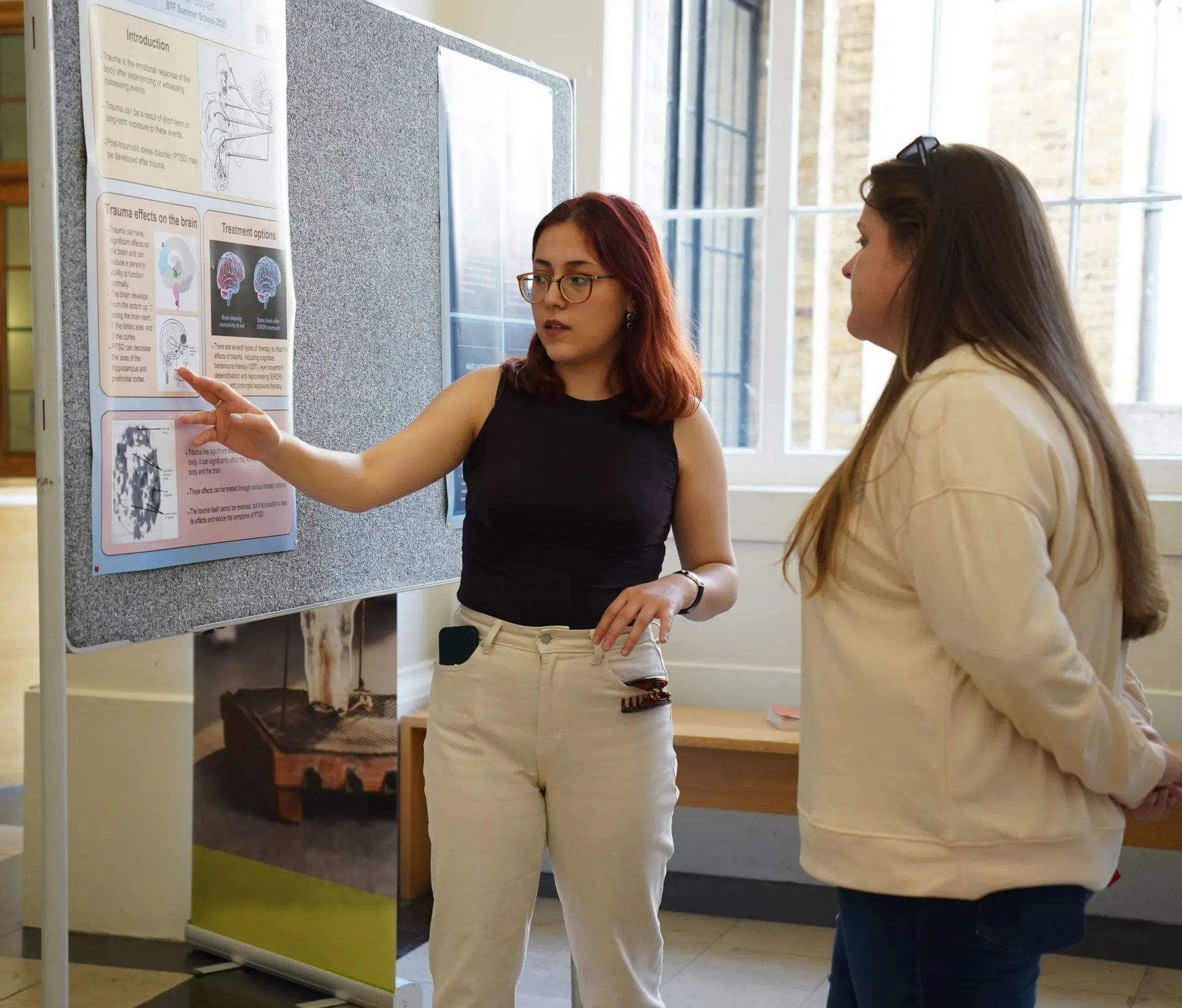

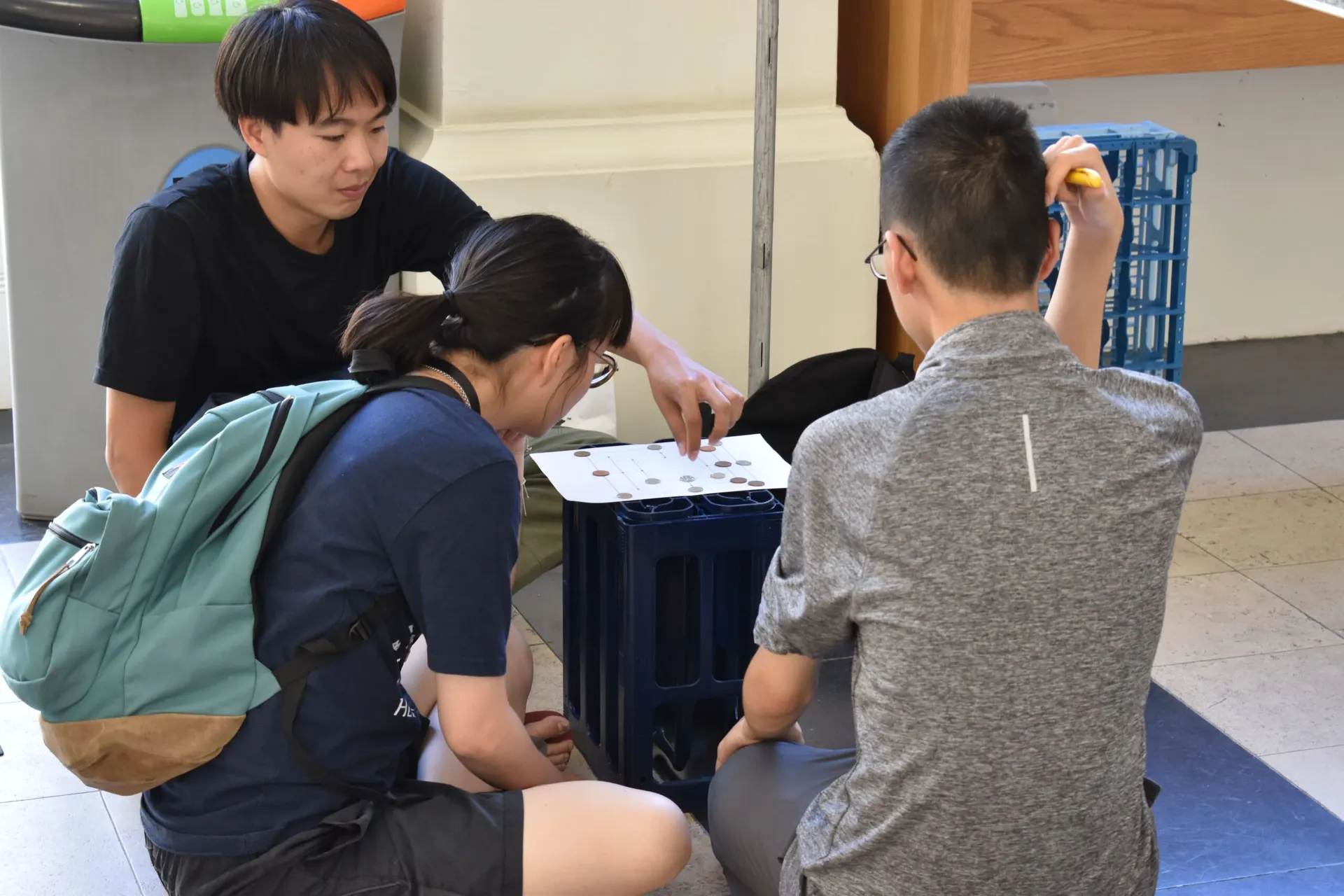
Key takeaways
- Bridging the Future’s free online mentoring scheme starts again in October 2026 and runs until March, with weekly one-to-one or small-group sessions in STEM subjects, IT and English for young people from refugee and forced-migrant backgrounds.
- Contact time is about one hour a week, but mentors report a total of roughly 4–6 hours a week in the first few weeks, including preparation, settling to 2–3 hours once a routine is established.
- The Education Endowment Foundation’s Teaching and Learning Toolkit rates mentoring at +2 months’ additional progress on average, at moderate cost and with moderate evidence strength, and warns that mentor drop-out can harm mentees.
- Since 1 September 2026, the Crime and Policing Act 2026 has removed the supervision exemption, so volunteers who teach or instruct under-18s frequently or on more than 3 days in a 30-day period are in regulated activity; DBS checks for volunteers are free.
- NSPCC guidance for online sessions with children recommends organisation accounts rather than personal ones, neutral backgrounds, written consent, a clear code of conduct and, as best practice, two adults present.
“One hour a week” is how volunteer mentoring is usually advertised, and it is both true and slightly misleading. It is true of the teaching. It is not true of the first month, when a new mentor typically spends four to six hours a week preparing, planning and finding out what their student actually needs.
We have run an online mentoring scheme since 2022, pairing young refugees and forced migrants with volunteer mentors — undergraduates, postgraduates, PhD students and postdoctoral researchers, many of them from UCL — for weekly sessions in STEM subjects, IT and English. Since 2022 we have supported 32 students through more than 250 hours of mentoring. The next cycle of online mentoring starts in October 2026, and we are recruiting mentors for it now through volunteer with us.
This article is the description we wish we had been given before we started: what the commitment really is, how the matching works, what a session looks like, how to design one that survives a video call, what the research says mentoring can and cannot do, which safeguarding checks apply after the September 2026 change in the law, and what mentors say afterwards.
- Students supported since 2022
- 32Students supported since 2022Across STEM subjects, IT and English
- Hours of mentoring delivered
- 250+Hours of mentoring deliveredEntirely by volunteers
- When the next cycle starts
- Oct 2026When the next cycle startsWeekly sessions running through to March
The honest time commitment
Here is the shape of it, from mentors who have done a full cycle.
Hours per week, as reported by mentors
Indicative, including preparation, not just contact time
Show the data as a table
| Category | Value |
|---|---|
| Weeks 1–3 | 5 hrs |
| Weeks 4–8 | 3.5 hrs |
| Weeks 9–16 | 2.5 hrs |
| Weeks 17–24 | 2 hrs |
One of our mentors put a number on it directly:
I would also advise potential volunteers to consider the time commitment to be approximately 4–6 hours per week for the first few weeks, but that can reduce to 2–3 hours later on, once a routine has been established. Elias, PhD researcher at UCL
And another, on the ratio of teaching to preparation:
I only taught one hour per week, but spent much more time preparing. My advice is to stay committed and give your best — because these students deserve it. Chapman, PhD student at UCL
That last point is not just our impression. The Education Endowment Foundation’s Teaching and Learning Toolkit entry on mentoring lists mentor drop-out as one of its four key findings, warning that it can have detrimental effects on mentees, and adds that the risk may be intensified for pupils who already feel a lack of support from their teachers and school. For a young person who has lost a country, a school and often a family network, a mentor who quietly stops replying in January is not a neutral event.
A mentoring year, month by month
The scheme is easier to picture as a calendar than as a description. This is the shape of a typical pairing in the 2026–27 cycle.
| Month | What is usually happening | What the mentor is doing |
|---|---|---|
| October | Matching, introductions, first sessions | Finding out what the student actually needs, which is rarely what the form said |
| November | The routine settles | Building material; identifying the two or three real gaps |
| December | Term ends; contact often thins | Agreeing in advance when sessions resume, so January is not a restart |
| January | Mocks, coursework deadlines, application deadlines | Past papers, exam technique, personal statement drafts |
| February | The heaviest month | Revision planning, marking practice work, interview preparation |
| March | Exams approach; the scheme formally closes | Handover: a revision plan the student can run alone |
Two things about that calendar are worth flagging to a prospective mentor.
December is where pairs die. Term ends, everyone is busy, one session is missed and then the thread is gone. The fix is trivially simple and almost never done: agree the January date before December starts.
March is not the end for the student. The scheme closes in March; their exams do not. The most useful last session is not more teaching but a plan — a written revision calendar the student can follow without you. Mentors who do this report that it is the thing students refer back to most. The research points the same way: the EEF notes that positive effects on attainment tend not to be sustained once mentoring stops, so the handover matters as much as the hours.
What we ask of mentors, in full
We would rather set this out plainly than have a volunteer discover it in week three.
| Commitment | Detail |
|---|---|
| Duration | One cycle, October 2026 to March 2027 |
| Teaching time | Approximately one hour a week |
| Total time | 4–6 hours a week initially, settling to 2–3 |
| Format | Online, one-to-one or small group |
| Preparation | Yours to plan; the coordinating team can supply material |
| Onboarding | Safeguarding onboarding before being matched with a young person |
| Communication | Through the agreed channels, with a moderator you can escalate to |
| Feedback | A short review at the end of the cycle, which shapes the next one |
We also ask for two things that are harder to put in a table. The first is honesty with the moderator when a pairing is not working. The second is finishing the cycle. A mentor who stops in January leaves a young person who has, quite reasonably, concluded that adults do not stay.
Who mentors, and how pairs are matched
There is no required background beyond expertise in the subject and the willingness to show up.
| Who | What they typically mentor | What they bring |
|---|---|---|
| Undergraduates | GCSE and A-level maths, physics, chemistry, biology | Recent memory of the exact syllabus and exams |
| Postgraduates and PhD students | A-level and beyond; university applications | Subject depth, and first-hand knowledge of admissions |
| Postdoctoral researchers | Advanced topics; research careers | What a research career actually looks like |
| Professionals in industry | IT, computing, careers, CVs | The non-university routes, which matter and are under-discussed |
| Qualified teachers and ESOL tutors | English, exam technique | Pedagogy, which the rest of us are learning on the job |
Several of our mentors had never taught before. That turns out to matter far less than expected:
This was my first mentoring experience. It improved my time management, and I learned the importance of patience and adaptability in teaching. Chapman, mentor
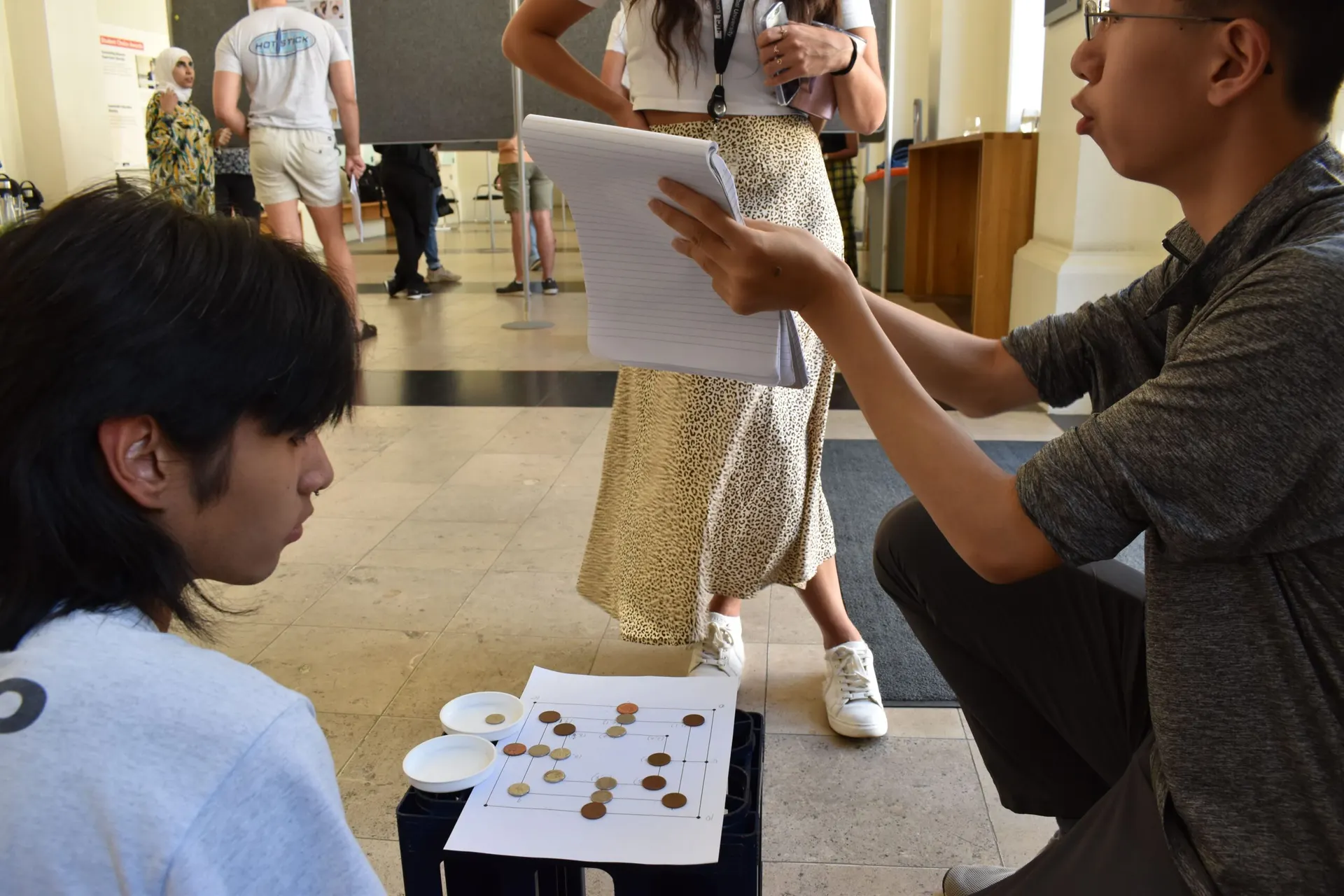
Matching is done by hand by the coordinating team, on three things: subject, level and goal.
Subject. A STEM mentor is matched to a STEM student. This sounds obvious and is regularly got wrong by larger schemes that match on availability. One of our mentors singled it out:
The team appears to be good at matching students to mentors considering both their backgrounds. For example, I have a background in STEM and was matched to a STEM student, therefore I was able to use my existing knowledge to the maximum. Elias, mentor
Level. A first-year undergraduate is often a better match for a GCSE student than a postdoc is, because the syllabus is fresher and the gap in confidence is smaller.
Goal. A student aiming at medicine needs different preparation from one aiming at an engineering apprenticeship. We ask, and we match on the answer. Our piece on why STEM matters for young refugees sets out why the destination is worth taking seriously from the first conversation.
Moderators sit above the pairs — a layer of volunteers who check in, spot problems, and step in when a match is not working. In a scheme this size that layer is what stops a struggling pair from quietly stopping. It is also exactly what the research recommends: the EEF finds that programmes with a clear structure and expectations, and with training and support for mentors, are associated with more successful outcomes.
What mentors do not have to be
A teacher. Most of ours are not.
An expert in the exam. Knowing the subject is enough; the specification can be looked up together, and doing so in front of the student is a useful demonstration of how to find things out.
An immigration adviser. You should not be, and you are not expected to be. Questions about status, housing, fees or casework go to the moderator, who routes them to organisations equipped to answer them. Our guide for professionals supporting a young refugee into education shows how many different agencies those questions can touch.
Available at fixed office hours. The slot is agreed between the pair. Evenings and weekends are common.
A counsellor. Being a consistent, interested adult is the pastoral contribution. Anything beyond that goes through the moderator.
What actually happens in a session
Not a lesson, usually. The mentors who describe their approach most confidently describe something closer to a weekly clinic.
The first two or three sessions
Exploratory. Nobody teaches much. The mentor is working out what the student actually needs, which is rarely what the referral form said.
My approach to mentoring centred on regularly asking the student for ideas on what they would like me to cover in our sessions. The first 2–3 sessions were more exploratory, aiming to understand the broad areas where I could be of help to the student. Elias, mentor
The middle stretch
Homework and coursework, mostly. Working through what school or college set, at the pace the student needs rather than the pace the class ran at. This is where the mentor’s real advantage shows: a class of thirty cannot stop; a pair of two can stop for as long as it takes.
Mentors describe two things they do constantly. The first is creating a safe space to not understand:
I wanted to create a safe space where the student could feel comfortable voicing their struggles with certain topics that they are covering in school, and so present our sessions as an opportunity to spend more time on these topics. Christina, PhD student in Electrical & Electronic Engineering, UCL
The second is language. Almost every mentor ends up teaching some English, whatever their subject:
Some of the main challenges my students faced included language barriers, limited access to resources, and difficulty balancing academic demands with personal obligations. To help them overcome these challenges, I used various strategies, such as providing additional explanations, examples, and highlighting the key terms in verbose questions to overcome the language barrier. Alyssa, PhD researcher at the London Centre for Nanotechnology
If you are a science mentor wondering how much of your hour will go on vocabulary, the honest answer is “more than you expect”. Our article on ESOL for young refugees aged 16 to 19 explains where general English provision stops and why subject language so often falls to people like you.
The final stretch
Applications and exams. Revision calendars, past papers, personal statements, mock interviews. This is the part with the clearest payoff and the tightest deadlines.
One student described what that looked like from the other side:
My mentor helped me prepare a revision calendar for my upcoming exams, which was one of the key components of my motivation as my exams were months away. We also had sessions where we just talked about life, how to study, how to manage work-life balance, which was very meaningful. Right now, as there is little time left until my exams, she is helping me stay on track and is preparing me extra tests and marking them to help me see my weakest parts. A Bridging the Future student
Note the middle sentence. We also had sessions where we just talked about life. That is not the mentor going off-task. For a young person with no adult in the country whose job is to think about their future, it may be the most valuable hour of the week.
What the scheme covers
| Area | What it includes |
|---|---|
| Subjects | Biology, chemistry, mathematics, physics, computer science, English |
| Academic support | Homework, coursework, exam technique, filling gaps from interrupted schooling |
| Applications | Personal statements, essay review, choosing institutions, deadlines |
| Interviews | Mock interviews for STEM degrees, including medical school and Oxbridge |
| Careers | CVs, cover letters, internship and opportunity matching, career planning |
| Pastoral | Study habits, work–life balance, and simply being a consistent adult |
The mock interview provision is worth flagging, because it is otherwise something families buy. A scheme staffed by people who have sat on the other side of a university admissions conversation can offer it for nothing, and does. Because the whole scheme is volunteer-delivered, it is also the cheapest thing we run; where the money goes sets out the arithmetic.
How to design a session that works online
New mentors ask for this constantly, so here is what our experienced ones do, checked against what the research says about structure.
The first session
Do not teach. The temptation is to arrive with material and prove you are useful. Resist it. The first session is for finding out what year they are in, what they are studying, what is coming up, what they find hard, and what they want to do afterwards.
Ask what they want to cover. Then ask again next week, and the week after. The single most repeated piece of advice from our mentors is that the student, not the mentor, should shape the agenda.
Establish the slot. Same day, same time, every week. Write it down. This one decision predicts whether the pairing survives better than anything else. The EEF reaches a similar conclusion from the other direction: regular meetings of once a week or more appear to be the most effective.
Find out about the exam board. GCSE and A-level content varies by board, and a student who is being taught to one specification does not benefit from practice questions written for another. It takes two minutes to ask and saves a term of mismatch.
Say what you do not know. A mentor who says “I don’t know, let me check” models exactly the behaviour a student needs and removes the pressure to perform.
Ask about their week. Not as small talk — as information. A student who has just been moved to different accommodation is not going to absorb electromagnetism this Thursday, and knowing that lets you change the plan instead of concluding that they are not trying. Our article on trauma-informed teaching for refugee students explains why predictability and choice matter so much for learners who have lived through disruption.
A shape for every session after that
Once the routine is established, a session might follow something like the structure below. It is an illustrative example, not a record of how any particular pairing runs and not a script, but it builds in three things the evidence consistently favours: work that is linked to what the student is doing in class, a mix of relationship and task, and a clear next step.
| Minutes | What happens | Why |
|---|---|---|
| 0–5 | Check in: how was the week, is anything coming up | Tells you whether today’s plan is realistic |
| 5–10 | Agree the agenda, led by the student | Keeps the hour theirs; surfaces the real gap |
| 10–40 | Work on what school or college set: one topic, worked examples, then the student tries | The EEF finds tuition has more impact when explicitly linked to normal lessons |
| 40–50 | Key vocabulary: the three or four subject words that tripped them up | Language is usually the hidden barrier in STEM questions |
| 50–55 | Quick retrieval: two short questions from last week | Consolidates earlier learning rather than only adding new material |
| 55–60 | Agree a small task and confirm next week’s slot | Momentum between sessions; no ambiguity about when you meet |
Three practical points make that hour work on a screen.
Share the page, not the whole desktop. A shared whiteboard or a single document is easier for a student on a phone to follow than a presentation, and it keeps anything else on your computer out of view — a point the NSPCC makes for tutors sharing screens.
Plan for a bad connection. A student may be joining from shared accommodation or on mobile data. Send the practice questions before the session so the hour is not lost if the video drops, and agree in advance what happens if it does. Our article on digital exclusion and asylum seekers’ education explains why devices and data are a real constraint rather than an excuse.
Keep a two-line note. What you covered, and what you agreed for next week. It takes a minute, it makes the next session faster to plan, and it is also the record a moderator needs if anything later gives cause for concern.
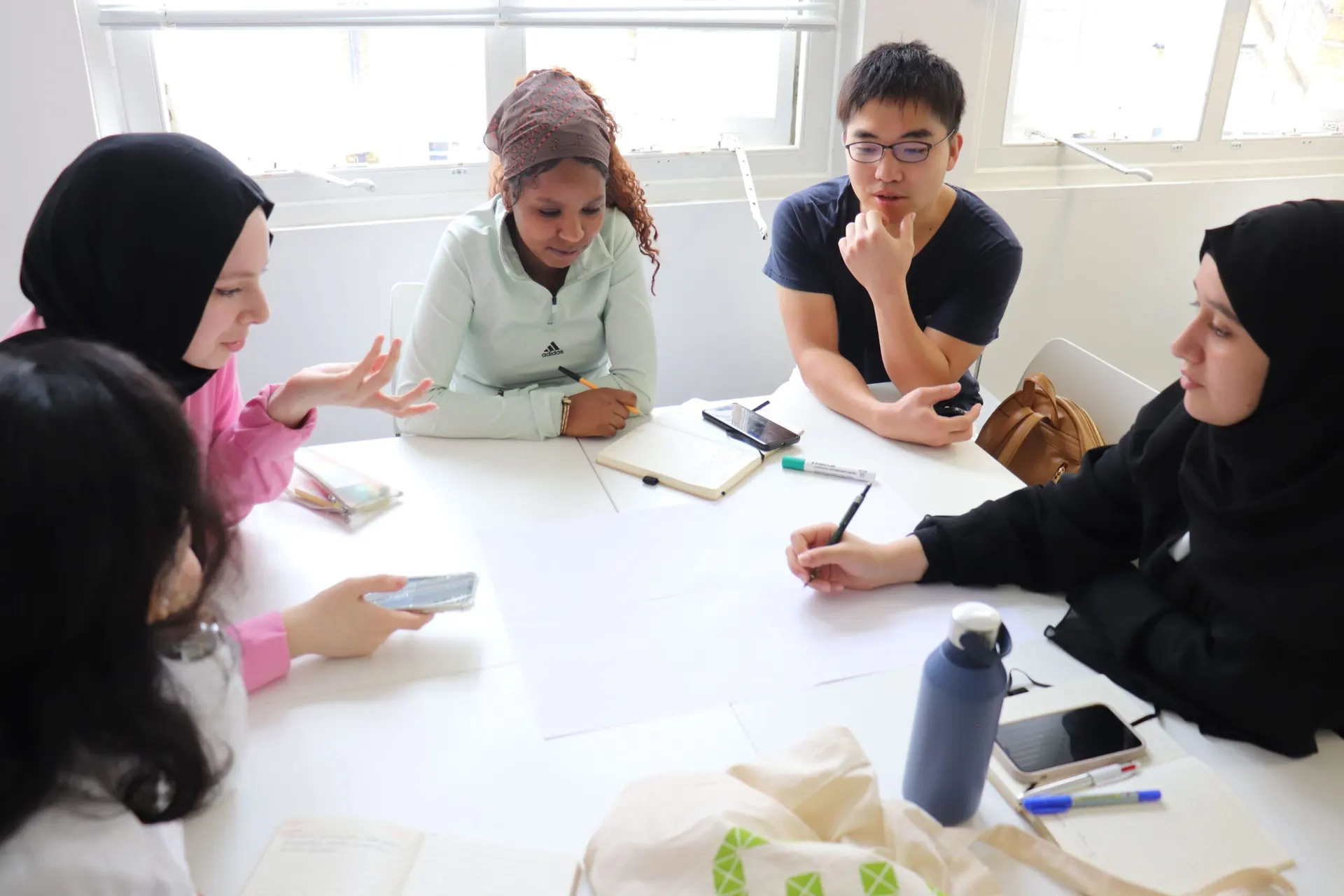
What does the evidence say about mentoring?
We are cautious here, for the same reason we are cautious everywhere: we are small, our alumni scatter, and we do not have the resources to run the kind of longitudinal follow-up that would produce a defensible outcome statistic of our own. What we can do is point to the best independent evidence on approaches like ours, and be honest about where it fits and where it does not.
The EEF Teaching and Learning Toolkit
The most widely used summary in England is the Education Endowment Foundation’s Teaching and Learning Toolkit, which converts research on school-age pupils into “months of additional progress” alongside ratings for cost and evidence strength. Its mentoring strand rates mentoring at +2 months on average, at moderate cost, with moderate evidence strength. It notes that some studies found more positive effects for disadvantaged pupils and on non-academic outcomes such as attitudes to school, attendance and behaviour — and that some studies report negative overall impacts where pairings go badly.
Importantly, the EEF defines mentoring as relationship-focused and explicitly excludes “academic mentoring” from that strand, pointing instead to its one to one tuition and peer tutoring strands. Our scheme sits between the two: a consistent adult relationship, but with most sessions spent on homework, coursework and exam preparation. So the tuition strands are relevant too.
Average additional months of progress, by approach
EEF Teaching and Learning Toolkit, as accessed in September 2026
- Mentoring2 months
Moderate cost; moderate evidence
- Small group tuition4 months
Groups of two to five pupils
- One to one tuition5 months
Studies involving digital technology show broadly similar effects
- Peer tutoring6 months
Learners teaching other learners
Show the data as a table
| Category | Value |
|---|---|
| Mentoring | 2 months |
| Small group tuition | 4 months |
| One to one tuition | 5 months |
| Peer tutoring | 6 months |
The one to one tuition strand averages +5 months, and the small group tuition strand +4 months. Three details in those pages matter for volunteer schemes. Programmes using volunteers “can have a valuable impact” but may be less effective than those using experienced, specifically trained teachers, which is why training and structure are advised. Studies involving digital technology show broadly similar effects, which is reassuring for online delivery. And the optimum pattern in the tuition research is short, frequent sessions over a set period — about 30 minutes, three to five times a week, for up to ten weeks — which is more intensive than a weekly hour. We would rather say that plainly than borrow a headline figure that does not quite describe what we do.
TASO and the university access evidence
For mentoring aimed at getting young people into higher education, the relevant UK summary is from TASO, the Centre for Transforming Access and Student Outcomes in Higher Education. Its entry on pre-entry mentoring, counselling and role models rates the evidence as “emerging”: a small positive impact on aspirations and attitudes, with more evidence needed on behaviour and outcomes. It adds a genuinely awkward finding — large-scale analysis with the Higher Education Access Tracker associated mentoring with lower progression to higher education and mixed results on attainment, though it cautions that this could mask very different programmes — and it recommends that anyone running mentoring evaluates it locally.
That is one reason we collect feedback from students, mentors and moderators at the end of every cycle, even though our numbers are small.
International reviews
In the United States, the National Mentoring Resource Center’s review of mentoring for school attendance, academic performance and educational attainment describes typical effects on academic outcomes as small-to-moderate. It finds larger than average effects for “instrumental” programmes that target specific skills with structure, mentor training and supervision, and for relationships that mentors and mentees rate as high quality. Its separate review of e-mentoring calls the evidence mixed, and makes a point every online scheme should take seriously: remote relationships may need more staff monitoring and support than in-person ones, not less.
MENTOR, the US national mentoring partnership, now in the fifth edition of its Elements of Effective Practice for Mentoring, puts the risk bluntly: research suggests that mentoring done haphazardly can be more harmful to young people than having no mentor at all.
A UK comparison: researchers as tutors
The closest UK model to our mentor pool is The Brilliant Club’s Scholars Programme, which places PhD researchers in schools as paid tutors, teaching groups of seven students for two hours a week. Its published impact evidence includes annual matched-comparison evaluations run by UCAS, the latest of which found that Year 12 participants were statistically significantly more likely to apply to, and receive offers from, competitive universities than similar students. It is a different programme — paid, school-based, group teaching — but it shows that researchers who are not trained teachers can, with structure and training, make a measurable difference to access.
What our mentors and students observed
What we can add is what mentors and students saw for themselves.
Several students have managed to receive offers to study at university. Bridging the Future provided something tailored to their unique circumstances. Chapman, mentor
I believe that above all the Bridging the Future programme has helped my student identify possible career paths for their future. It helped the student understand what their academic strengths are, and what they enjoy studying the most. Elias, mentor
And from a student who came in with no interest in science whatsoever:
Online tutoring was helpful and helped me to improve my grades in science. My mentor supported and helped me with science revision, my college application and even my college interview — what questions might come and how I should answer them. With this help, I got a chance to get an offer for my college application. Enkophazion, student
Thirty-two students is a small number. For each of those thirty-two, it was the whole thing.
What safeguarding checks do volunteer mentors need?
Some of the young people we work with are under 18, and all of them are at a point in their lives where the adults around them carry real influence. Safeguarding is therefore not an administrative step before the interesting part. It is part of the job.
This section is general information about the rules in England as they stand in September 2026, not legal advice. Organisations should check the current DBS eligibility guidance for each role.
The September 2026 change: supervision no longer exempts volunteers
Until 31 August 2026, an unpaid volunteer who taught or instructed children was not in “regulated activity” if they were sufficiently supervised by someone who was. The Crime and Policing Act 2026 removed that supervision exemption from 1 September 2026. Now, anyone who teaches, trains, instructs, cares for or supervises children often enough — on more than 3 days in any 30-day period — or overnight is in regulated activity, supervised or not.
The Disclosure and Barring Service’s own explanation of the change says it affects any organisation with staff or volunteers who teach, train, instruct, care for or supervise children, explicitly including charities and community groups. Its eligibility guidance gives the example of a charity volunteer who teaches children to read every Saturday morning: that role meets the period condition and is eligible for an enhanced check with the children’s barred list.
Two points follow for a mentoring scheme. It is an offence for a barred person to engage in regulated activity, and an offence to permit them to. And the relevant check for roles in regulated activity is an enhanced DBS check with children’s barred list information, which the DBS guidance for voluntary organisations confirms is free for volunteers — defined as people who are unpaid apart from expenses.
The guidance does not set out a separate rule for teaching delivered online, and it applies to under-18s: some of our students are 18 or over and are adults in law. The NSPCC’s position for tutors is simple and we share it: everyone working or volunteering with children should be safe to do so, whether the work happens online or face-to-face.
| Guidance | Who it is written for | What it means for volunteer mentoring |
|---|---|---|
| Regulated activity: removal of the supervision exemption (DfE, in force 1 September 2026) | Schools, colleges, childcare providers; the underlying law applies to all organisations | Supervised volunteers who teach under-18s often enough are now in regulated activity |
| DBS checks guidance (DBS, updated September 2026) | Employers and voluntary organisations | Enhanced checks for eligible roles; volunteer applications for standard and enhanced checks are free |
| Working together to safeguard children 2026 (DfE, March 2026) | All agencies, including voluntary, charity and social enterprise organisations | Paid staff and volunteers have the same safeguarding responsibilities; every organisation should have safeguarding policies and people who know how to make a referral |
| Keeping children safe in education 2026 (DfE, in force 1 September 2026) | Schools and colleges | A useful benchmark for charities: volunteers with no checks should never be left unsupervised, and online safety risks fall into four areas |
| Safeguarding and child protection for tutors (NSPCC, updated April 2026) | Tutoring organisations and independent tutors | Policies, a code of conduct, references and criminal record checks before working with children, plus training to recognise abuse |
What Working Together 2026 expects of a charity
The statutory guidance for multi-agency safeguarding is direct about the voluntary sector. Working together to safeguard children 2026 says that practitioners in voluntary, charity and social enterprise organisations are subject to the same safeguarding responsibilities “whether paid or a volunteer”. Every such organisation should have policies in place to safeguard and protect children, and individual volunteers should know their responsibilities, how to respond to a child protection concern, and how to refer to local authority children’s social care or the police if necessary. It also says they should have the organisational arrangements set out in its chapter on organisational responsibilities, which include safe recruitment practices and policies on when to obtain a criminal record check, a designated practitioner for child safeguarding, clear whistleblowing and escalation procedures, and an induction covering child protection responsibilities.
In practice, for a mentor, that means four things: completing safeguarding onboarding before you are matched; knowing who the designated person is; never promising a student that you will keep a worrying disclosure secret; and passing concerns on the same day through the route you were given.
How are online sessions kept safe?
Online mentoring removes some risks — nobody is alone in a room with a young person — and introduces others. The NSPCC’s guidance on live online sessions with children and its safeguarding guidance for tutors are the most practical sources we know. Their main recommendations translate into a short checklist.
| Good practice | How it can apply to a mentoring session |
|---|---|
| Organisation accounts, not personal ones | Sessions run on an organisation account rather than a personal one, with privacy settings checked; no personal social media contact |
| A code of conduct | Mentors know the expected behaviour and professional boundaries before the first session |
| Neutral backgrounds | Nothing personal or inappropriate visible behind the mentor; a blurred background if the student can only join from a bedroom |
| Written consent | Students, and parents or carers where appropriate, understand how online sessions work and agree to them |
| Think before recording | Recordings of an identifiable person are personal data under the Data Protection Act 2018; be clear why a recording is needed before making one |
| Two adults as best practice | A moderator or second adult who can join, and a plan for supervising any breakout rooms |
| Cameras are a choice | Some young people will not want to show their home; if a camera stays off, consider a separate check-in rather than insisting |
| A clear route for concerns | Mentors know what to do if something seen or heard on a call worries them |
The camera point deserves emphasis for our students. The NSPCC notes that some children may be uncomfortable with others seeing into their home, and some might want to hide something that is happening there. For a young person in shared or temporary accommodation, a camera that stays off is usually about privacy or space rather than disengagement. It is still worth noticing, and a moderator can follow up gently.
It also helps to know the four areas of online risk that Keeping children safe in education 2026 uses: content (harmful material, now explicitly including misinformation and conspiracy theories), contact (harmful interaction, including adults posing as young people), conduct (behaviour that causes harm, such as sharing explicit images) and commerce (gambling, scams and phishing). A mentor is not a filter, but a student who mentions being contacted by a stranger offering help with their application, or asked to pay for a “guaranteed” place, is telling you something a moderator needs to hear.
What goes wrong
We would rather publish this than pretend it is frictionless.
Momentum collapses. The single most common failure. A session is missed, then two, then the pair stops. Every experienced mentor’s advice converges on the same fix:
Try and find a regular slot, that stays fixed, to get together with your mentee. Establishing a routine will be useful for both parties, and ensures the momentum keeps going. It’s easy for work and personal life to get in the way, but this programme is important and really does change lives. So allocating it a dedicated time for your headspace is really useful. Fern, PhD student in High Energy Physics at UCL and CERN
Life intervenes, on the student’s side. Housing moves, asylum decisions, family news, work. A mentor who treats a missed session as a discipline problem loses the student. A mentor who treats it as information adapts:
I had a student that had a lot of personal circumstances to overcome during their time with me, and would often feel overwhelmed juggling everything with their studies. Together we came up with a plan for their studying… We made sure to never go too long without contact to keep the momentum high. Fern, mentor
Young people who arrive in the UK part-way through their schooling face gaps that are structural rather than personal. The GCSE vacuum explains why a sixteen-year-old new arrival can be bright, motivated and still several steps behind the syllabus.
The mentor over-plans. New mentors often arrive at session one with a syllabus. Almost all of them abandon it by session three:
With limited knowledge of where they are at in their academic curriculum, it can be challenging to plan lessons that cater to their specific needs. Instead, I developed skills to think on my feet, become more flexible and resourceful, and learnt to adjust my teaching approach accordingly. Alyssa, mentor
Timelines move. Exam dates change, college offers arrive early, an interview appears with a week’s notice. Adaptability is the core skill, more than subject knowledge.
The technology fails. A dropped call, a phone with no data left, a shared room with no quiet corner. None of these is a reason to give up on a pairing; all of them are reasons to send materials in advance and agree a fallback.
What mentors get
Every mentor we have asked says some version of the same thing, and it is not altruism-flavoured. It is concrete professional development.
Communication under real constraints. Explaining a hard idea to someone who does not share your first language is the most demanding form of science communication there is.
This programme has forced me to really think about the best and alternative ways to communicate complicated and new concepts, which is invaluable for me as a PhD student, especially as I personally wanted to improve my communication skills for when I attend conferences and present my own work. It has also really emphasised the importance of understanding something in order to then teach it to someone else. Christina, mentor
Session design and teaching craft. Useful for anyone who will ever demonstrate, lecture or supervise.
My experience as a BtF mentor has helped me hone my teaching skills, including communication and session design. It has empowered me to leverage my network to support positive change. Hector, PhD student in electrochemical energy materials at UCL
Understanding of a system you probably do not know.
At the beginning of the mentoring scheme I was not very familiar with the secondary education system in the UK. The scheme helped me understand its structure and function, and to appreciate its strengths and weaknesses. Elias, mentor
Perspective.
It reminds me to be grateful. I have a fantastic family around me and was raised in a stable environment. It’s easy to take this, something I’ve had since I was born, for granted. When I form close working relationships with others who have overcome things I never used to even think about, it resonates with me. Fern, mentor
Volunteers can also teach at the summer school, which runs for two weeks in August at UCL and needs teachers, demonstrators and coordinators. Some volunteers do both; most do one. More accounts from mentors and students are collected in our stories.
The shortest advice we have received
We asked mentors what they would say to someone considering it. Most gave a paragraph. Hector gave two words:
Do it. Hector, mentor
First compiled December 2025; updated September 2026 with the October 2026 start date, the change to regulated activity that took effect on 1 September 2026, and evidence from the EEF, TASO, the National Mentoring Resource Center, MENTOR, The Brilliant Club and the NSPCC. Mentor and student quotations appear in full in our stories collection. Programme figures come from Bridging the Future records. Safeguarding rules change — this is general information, not legal advice, so check the current GOV.UK guidance, and if you spot something out of date, please tell us.
Keep reading
- Why STEM matters for young refugees — the careers and social mobility case behind the subjects we mentor.
- Trauma-informed teaching for refugee students — what predictability and choice look like in practice.
- Digital exclusion and asylum seekers’ education — why devices and data shape every online session.
- The GCSE vacuum — the gap mentoring is aimed at.
Frequently asked questions
When does Bridging the Future’s online mentoring start?
The next cycle of our free online mentoring scheme starts in October 2026 and runs until March. Sessions are weekly, online, and either one-to-one or in small groups, covering STEM subjects, IT and English, plus CVs, personal statements, university applications and mock interviews. Students can read more on the online mentoring page, and volunteers can apply through volunteer with us.
How much time does volunteer STEM mentoring take?
Teaching time is about one hour a week. Our mentors say total time, including preparation, is around 4–6 hours a week for the first few weeks, dropping to 2–3 hours once a routine is established. The cycle runs from October to March, and the single most useful commitment is a fixed weekly slot that you keep through December and into the exam season.
Do volunteer mentors need a DBS check?
Our mentors complete safeguarding onboarding before being matched, and the coordinating team explains which checks apply to the role. Under GOV.UK guidance, volunteers who teach, train or instruct under-18s frequently or on more than 3 days in a 30-day period are in regulated activity, which is eligible for an enhanced DBS check with a children’s barred list check. Since 1 September 2026 supervision no longer removes that requirement. DBS checks for volunteers are free.
Can I mentor if I am an undergraduate or live outside London?
Yes to both. The scheme is online, so sessions are not tied to London, although many of our mentors are students and researchers at UCL. Undergraduates are often the best match for GCSE-level students because the syllabus is recent and the confidence gap is smaller. Several of our mentors had never taught before; patience, consistency and a willingness to adapt matter more than teaching experience.
Which subjects are most needed?
Mathematics and physics, consistently. English is also in demand, and mentors who can support academic English alongside a science subject are especially useful, because almost every mentor ends up teaching some subject vocabulary whatever their specialism. We also welcome mentors from industry who can help with IT, CVs and careers, including routes that do not go through university.
What should I do if my student stops replying?
Tell your moderator early rather than waiting. A missed session is usually a sign of life getting in the way, such as a housing move, an asylum appointment, work or family news, rather than a lack of interest. A moderator can often re-establish contact where an individual mentor cannot, and we would much rather rematch a pair in week four than lose a student in week ten.
Does mentoring actually improve results?
On average, modestly. The Education Endowment Foundation rates mentoring at +2 months’ additional progress, with bigger effects in some studies for disadvantaged pupils and on attitudes and attendance. One to one tuition averages +5 months. Programmes with clear structure, mentor training and support, and regular weekly meetings do better, and gains tend to fade once support stops, which is why a good final session leaves the student with a plan.
Sources & further reading
Every third-party figure quoted above links back to its primary source. Where a statistic is our own, it comes from our programme records.
- Teaching and Learning Toolkit: Mentoring, Education Endowment Foundation
- Teaching and Learning Toolkit: One to one tuition, Education Endowment Foundation
- Mentoring, counselling, coaching and role models (pre-entry), TASO
- Mentoring for Enhancing School Attendance, Academic Performance, and Educational Attainment, National Mentoring Resource Center
- E-Mentoring, National Mentoring Resource Center
- Elements of Effective Practice for Mentoring, MENTOR
- Impact, The Brilliant Club
- Regulated activity: removal of the supervision exemption (comes into force 1 September 2026), Department for Education, GOV.UK (2026)
- DBS checks guidance for employers, voluntary organisations and third parties, Disclosure and Barring Service, GOV.UK (2026)
- Working together to safeguard children 2026, Department for Education, GOV.UK (2026)
- Keeping children safe in education 2026, Department for Education, GOV.UK (2026)
- Safeguarding and child protection for tutors, NSPCC Learning (2026)
- Photographing and filming children (including live online sessions), NSPCC Learning (2026)
- Bridging the Future programme records, 2022–2026, Bridging the Future
Spotted something out of date, or have a figure we should include? Write to contact@bridgingthefuture.org and we will correct it.